Friday, October 29, 2010

Retaining Female Leadership: Myths and a New Vision

by Nina Carduner

It has been well-documented that retaining and promoting female talent into top-level executive management has been a serious challenge for American companies and corporations. Women comprise about 50% of the American workforce and yet, of all the chief executives in the top 500 us companies (in 2009), only 3% were women.

This gender imbalance has been explained primarily by blaming women. Explanations for the disparity include things like:
The common message threading through this list is, "women, it's your fault there isn't gender parity." Companies openly recognize the importance of retaining female talent and express a commitment to do so, yet shockingly, 70% of businesses don't have a plan or strategy to follow through with their intentions! And when companies do implement a strategy, they usually focus on narrow solutions like flexible work schedules without addressing the broader system at play within their organizations.  

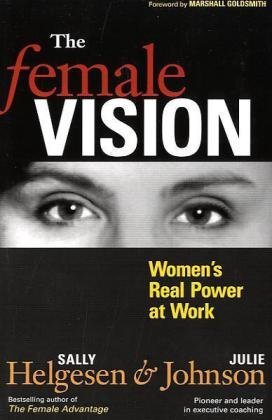
"The Female Vision," persuasively illustrates how a system that repeatedly underutilizes the unique talents of women is alienating more and more women as they reach the top. Helgesen & Johnson have written a well-researched book that offers a new perspective on why women leave when they break through the glass ceiling and reach the glass cliff. One phrase that came up over and over in their independent research was, "It just wasn't worth it." This sentence alone speaks to a much larger systemic culture issue that is not adequately captured by the current understanding of the lack of female executive leadership. In a brief summary, they discovered women often find it difficult to act on their unique skills and talents because companies are not structured in a way that values or allows for the expression of these traits. With frustration and personal defeat, women quietly exit the pathway to corporate leadership.  

Personally, I found this book to be affirming and energizing. Many of the stories are eerily recognizable and the research is clear. Yet, The Female Vision constructively offers compelling systemic solutions for organizations and businesses that want a refreshing approach to capitalizing on and developing their female talent.

Check it out: The first chapter is free for the Kindle!

Reposted with permission from Secretariain't. 

Tuesday, October 26, 2010

4 Trends that will Drive the Next Economy

by Jean Brittingham

I’ve been a little sluggish in my blogs recently because I’ve been working on the book! It’s very exciting to see it coming together. In the book we discuss the characteristics, strengths and success stories of women entrepreneurs and the critical role that women will play in the Next Economy. Today I thought I’d share my thoughts about this new economy as I see it evolving.

The real recovery from the “great recession” will come with some major changes that actually portend good things for entrepreneurs. First, there is near-consensus that the recovery cannot be built on consumption as it has reigned in the last 50 or so years. Resources are too limited, the planet is too fragile and large corporations that supported this consumption too easily become institutions unto themselves that care only for their own future and their own profits and fail in a huge and costly manner.

Instead we should begin to envision and shape the next economy—one that is focused on creating a new solid economic base, is powered by a low-or no carbon energy source, is driven by innovation, transparency and collaborative business models and creates opportunity across the entire spectrum of social-economic reality.

There are many thoughts and ideas out there about what will drive and create this new economy.  I believe it will be driven by the following four trends:

  1. A resource-constrained environment on a health-challenged planet
  2. The creation of “mega-intelligence” through collaborations that create in-depth knowledge and insights in the fields of science and technology
  3. A massive amplification of creativity that feeds innovation 
  4. The rise of entrepreneurial collaboratives 

Let’s first look at the issues related to a resource-constrained planet. This is not a hypothesis but rather our reality. Peak oil is around the corner. Coal, while abundant, is a major contributor to unhealthy air and global warming. Increasingly, we will have to learn how to reuse what we have already used and treat the planet as the amazing life support system that it is. This one truth has to be embraced—the planet does not exist for the benefit of the economy. It just exists. If we foul it forever, we are truly lost.

But an economy that benefits humankind, supports the development of peaceful society on earth, and sustains our life-support planet infinitely is not only possible but we can actually begin to see how we will get there.

Mega-intelligence as I am talking about it here is not a new field of study of the so-called super class of genius. I don’t mean to be dismissive, but if brillant individuals could save the world, we would certainly be in a different spot right now. More appropriately, this term refers to the combined or collective intelligence that can be put to a problem through the connectivity and transparency afforded by increasing ubiquitous technology. Our digital connections have taken us well beyond any boundary condition previously thought of around the internet (for those who like to think about limitations) to a place where individuals of different cultures and language are collaborating on projects ranging from nuclear energy to music in the “cloud” and we are lending our personal computing ability to work 24/7 on the worlds most pressing problems—at least those that can be approached through 0s and 1s.

We are at the edge of knowing how to harness and focus this intelligence and the success of recent movements ranging from politics to science assures us that we will solve many more problems together than we have even dared to dream of by ourselves.

Creativity is fuel. It generates momentum and optimism. A wonderful/horrible truth of human nature is that when pushed to the limit, we get very creative. Our survival instinct is strong and often kicks it into high gear to help us out of a tight spot.

The current economic reset represents just such a tight-spot. Even if you don’t understand or care much about economics, it’s clear that something dramatically different is afoot.  Not only is a rebound to the old consumptive habits unlikely—most of us don’t seem to want it. But we aren’t excited about a future that is less interesting or comfortable either. So things are getting creative. Creative ways of working and living, of finding value propositions and new business models and creative about collaboration and wealth creation. Creativity and urgency have energized some amazing collaboratives and innovations.

And finally, whether as a result or a response, the willingness to exercise our entrepreneurial spirit has never been higher. Whether in the clean-energy economy, social enterprises focused on creating breakthroughs in traditionally underserved communities or as spin-offs and internal “tanks” in the big dog corporations, the fall of the old economy has seen the rise of entrepreneurs.

Polar opposites come together to pave the way to a future that is more vibrant, resilient and flexible. A world where entrepreneurial spirit and self-reliance is augmented and magnified by a connected creativity supported by technology that builds communities that learn, grow and make a living together.

You can see why I think the entrepreneurial future is one where women will thrive.
Success in the future will likely be measured more by the quality of your experiences than the 0s after your income bracket. Your net contribution to life will matter more than your net worth. And the inheritances your grandkids will care about are great communities, interesting work and a healthy planet.

Monday, October 18, 2010

Angry, Exhausted, Frustrated and Wrong!

by Jean Brittingham

I didn’t even know where to start when my new-media maven asked me to respond to this post by Penelope Trunk.  I get the power of a hyperbolic title, but really? Women Don’t Want to Run Start-Ups Because They’d Rather Have Children?

There’s so much wrong here it’s hard to set your sights.
At the same time I completely feel for her.

And before I say anything else, congratulations Penelope on leading (what one can hope) will be a great success in your third start-up. It’s clearly been a struggle that lasted too long with too little reward. That in itself is dismaying, but it’s much more distressing when women with talent who have begun to carve a spot for themselves succumb to the models that make entrepreneurship exhausting, silly, and impossible to love.

Let’s begin with the premise behind Trunk’s (and Jeff Steibel’s) definition of entrepreneurism as a disease.  This particular definition suggests that these two (and a few other business writers with this view of entrepreneurship) think they “own” the definition.  Entrepreneurs to them are men (and the OCCASSIONAL woman) who take on VC capital against an unlikely bet and work horrific and thankless hours (the thanklessness comes mostly from the VC partners but also from the team you are driving and the family you are deserting) to breakthrough the probability factor and post an amazing win. 
Or at least get a buy-out so that you break even.

This isn’t THE Entrepreneur typology; it’s ONE Entrepreneur typology.

The state of the planet, the state of the economy, the state of our lives and the incredible number of human beings who have GREAT ideas they are turning into GREAT businesses means that this is a limited and limiting view of entrepreneurs.

Most importantly--it’s not going to help us construct the next economy.

Instead, I see a future (and many join me here) where both the investment community and consumers take note of and then begin to actively foment support for some different breeds of entrepreneurs. 

While I am not at all sure about the role Solopreneur’s will play in the next economy, it is clear that the reemergence of a craft economy plays a significant role in the future. These individual contributors, who are often working in complex networks and loose affiliations with others, are crazy, all right—crazy smart.
More interestingly (at least to me) are the new breed of social entrepreneur—where a much higher proportion of women are striking out and making a difference while making a living. These social entrepreneurs are developing businesses that offer solutions and hope because they see themselves and their business ideas as an integral part of a better world.

And finally, there are the women who are breaking through and making businesses work well and also work with their lives—businesses that create financial success for founders and a growing contingency of employees. These women believe that you can, and should, have a life and a business, a financial goal and an nonnegotiable ethos, a current reality that works and a future that works better.

Suggesting that women don’t want to be entrepreneurs because you have burned yourself out by “manning-up and buying-in” to a set of investor and personal standards that leave no space for anything but profit, is not the future of entrepreneurs.

It’s not the future of anything.
Life is too short, the planet is too fragile and frankly, Penelope is right—there are children to raise.  The part she got wrong is giving up one to get the other. I believe we can change the rules instead!

Wednesday, October 6, 2010

Emotional Intelligence and the Impact of Feminine Leadership

by Jean Brittingham

A recent study on group IQ confirms what we at the SmartGirl’s Way have long known—that women have rocking relationship skills.  The study shows that the ability of a group to solve a difficult problem was directly related to the number of women in the group--essentially the number of women increases the collective cognitive abilities of the group. Women are natural collaborators and relationship builders. What hasn’t been well documented yet, is the strong positive effect that these skills, referred to as “social sensitivity” in the study, have on the efficacy and productivity of groups working together in any capacity—including the work environment. 

The growing understanding of the importance of this link and its positive impact on performance contradicts some of western society's most loved conventions—in particular, that smart people alone make a smart group and that feelings don’t matter in the workplace.

In an ever more complex world, the ability to read expression and tone, express empathy, effectively reframe a tense situation, and energize a group through a sense of camaraderie are the winning leadership skills of the future.

When I first became intrigued with “women’s ways at work” and in particular the aspects of the feminine at work in a masculine world, I began to be very conscious and take note of the language women use to describe who they are, what they are doing and how they are doing it. I started noting strong similarities in the skills that women were applying to their lives, no matter what they were doing. I also noticed that women tended not to talk about these skills to men, in particular to the men they worked with and worked for.

I started asking direct questions about this and was amazed at the consistency in the answer—women don’t talk to men about how they think, feel, work, make decisions, create, collaborate or achieve because up to now, men not only don’t understand it they think it is too “soft” and doesn’t belong in the work place. Worse yet, since it is not as natural for men, they tend to diminish the importance of this type of intelligence in the work environment.  This even  after strong uptake (at least theoretically) on the concept of emotional intelligence.

A strong contributing factor to the lack of acknowledgment of women’s unique skills at work has been the intentional (and obviously necessary) effort to create equity between the genders in terms of pay, access and opportunity. Sadly this effort has unintentionally diminished the unique and valuable differences between men and women.

Time to Embrace the Feminine Leadership Skill Set!


Highly refined “social sensitivity” is an outcome of the ability and natural tendency to create strong communities and relationships that endure whatever the circumstances. It is a subset of an amazing array of feminine strengths that we have just begun to openly discuss and tap.

These skills are amazing, awesome, world-changing!!  Why would we want women to leave these capabilities to the other parts of their lives?  They have kept families and society ticking along for millennia. They are the foundation for the way that things work when they are working really, really well.  And they are dramatically missing in business. 

Finally, and maybe most importantly—they are the same traits needed for society to shift to a sustainable and THRIVING existence on our big blue ball. I for one want more of that.


Friday, June 25, 2010

Up to Scale: Does your product or business stand a chance?

by Jean Brittingham


I keep running into articles about how important it is that innovation be scalable. I just want to say, “duh.” It really seems too obvious to write about. And yet, too often it is overlooked in the thrill of innovation—and maybe even more so in young entrepreneurial organizations. Worse yet, there hasn't been a lot written about how to test in advance if your "baby" will scale. 
Even in large seemingly capable corporations and organizations I have seen enthusiasm for an idea generated by a charismatic leader with a devoted team completely over ride the signals that they are getting that at least one critical ingredient for scalability is missing. 
So what does it take? There are five determinates to scalability. You can apply tests for each of these at any time in the design and development process, and entrepreneurs should certainly inform their design, test, re-design process around some tool to help assess scalability attributes as the idea evolves. As I use to tell young engineers and designers when I lectured to college seniors, "out in the world—it doesn’t matter how perfectly engineered your solution may be. If people don’t like it, it won’t get built!"
When combined, the characteristics of a product that are easily scaled are a measure of convenience. Humans are generally very practical. We like new things but we like the new things to integrate easily into our lives.
If you use this scale, you don't need a perfect score on all determinates, but you best not have a low score on more than three. And, I probably don’t have to state the obvious, but you should not be the only one scoring your product*, invention, business idea, project or breakthrough organizational turn-around. Ask as many others to understand, use, and score your idea as you can get to sit still for it. (*note: when I say “product” from now on it means all of the above)

In my experience, here’s the simplest most direct way to go about this process. 
Define each of the characteristics in the graphic below for your product, service, change initiative, etc.. For example, what does it mean for your product to be accessible.

Ask your customers, team members, boss, champions, and other stakeholders to rate your product against the definition. If you have a known skeptic, for sure ask her to rate your product. It will skew the score probably but if they take the test seriously it will give you valuable information about design shifts you might need to make. 
If they don’t like the definition after they have tried your product on for size, let them offer a new one. 
Gather all the scores, create a composite and give yourself a very hard look. 
You will have specific information about how to redesign, shift and improve. You may even find that you are ready to go—launch away. If the scores actually feel discouraging, you should assign someone from your team to go back and do some one-on-one interviews. You will need detailed information to understand why what you thought was great didn’t make the cut for convenience.

Let’s run through my scores for the iPhone (no not even the new one, I haven't upgraded yet—the lines are inconvenient!).

Accessible – I give it a 5 as a tool and a 3 as a phone. I don’t really like to use a headset with wires, have worries about wireless headsets, and it’s not a comfortable phone to hold to my head. It does have a good speakerphone and lets me do some things while I’m on the phone. It nets out at a 4.

Affordable – It’s an expensive phone, but we all know it’s much more than a phone. If there is one great frustration it’s the lack of flexibility in the plan. AT&T—not as happy with them as I am my phone. Still, generally for all I do on it, it’s pretty affordable. I’ll give it a 4.

Reliable – No doubt. I’ve gotten “unlost,” found the best local pizza, managed friend meet-ups and entertained myself on planes for hours. A solid 5.

Secure – This is an interesting attribute measure. Think of it this way-- does it make me feel safe and happy? This single convenience attribute is why organizational change initiatives often don’t get off to a ripping-good start. They don’t make people feel very safe—unless there is a great leader at the top communicating constantly about the benefits at the end of the pain. For my iPhone, I do feel safer when I have it with me. I also do worry about someone knowing everything about me (I know, I know) if I lose it. It’s a 4.

Interesting – This is where the iPhone shines. It is fun, intuitive to use, and there is new stuff for it all the time. Of course it’s a 5. I'd give it a 10 if I could.

Overall: 4.4 This thing should scale!!
Lower scores are acceptable when you are introducing a brand new technology or making a dramatic shift in culture or business model. Scores may be low because of resistance to change—but don’t assume this is true. You need to engage people and be open to improving your product to really understand barriers.

Feedback of this type will help you determine if your idea will scale easily and smoothly or if you are in for a crazy hard climb!

Tuesday, May 25, 2010

Multi-tasking: The Upside and Downside

by Jean Brittingham

There is a lot of chatter about how multi-tasking is a bad thing. This discussion has arisen from the incredible surge in technology that has enabled us to connect with vast amounts of information at every minute of the day. The amount and diversity of information that flows into our daily lives is unprecedented to the point that people are scapegoating multi-tasking in reaction to the inevitable distraction that results from poorly managed information flow.

But there is a distinction between distraction and multi-tasking. Distraction is what multi-tasking naysayers are talking about. Distraction occurs when you are "on-task" and some bit of information or something interesting pulls you off that task. Distraction can be deadly. It can keep you from meeting deadlines, doing quality work or even completing a thought. An antidote to distraction is discipline, and frankly, some technological savvy. Quick computer fixes include:
The Upside

Today, I want to focus on a well documented distinction between men and women in multi-tasking. Women can and do multi-task all the time. The primary reason we can pull this off is that our brains are wired to do so. This well-developed talent is due to millions of years of evolved focus on lesser tasks while simultaneously doing the primary tasks for the survival of the species--caring for babies and children. A recent study demonstrated that the primary difference between men and women multi-tasking  is that while women didn't necessarily get more done than men when completing the same (multiple) tasks, they tended to make significantly less mistakes.
 
The Downside
 
What this means is that we do tend to take on more than our male counterparts do when we start our own businesses. We often tend to think we can do everything after experiencing success in our lives in handling not only multiple priorities but often simultaneous activities.

While multi-tasking is beautiful when it works, it can lead to overcommitment. Overcommitment will often back us into very tight places trying to be all things to all people in a rapidly shifting environment. We have a tendency to hold on to our obligations on all fronts--family, friends, social, and community commitments. In entrepreneurial settings, overcommitment is even more problematic because we're often working to the bone to fund our business since women have a harder time getting venture capital or loans for start-ups.

Sometimes we can pull it off. But usually, this type of overcommitment will slow us down and in the worse case scenario—it will cause us to lose motivation.

The antidote as I said is discipline, and the discipline is to prioritize. We need to multi-task where it counts. Make a list of the things in your company, business, and life that only you can do. It's still a big list--I know it is.

Now, pull off the most important 20% of that list. This will be hard, but you must make yourself do it. What are the things on that list that are critical? What are the things that no one else but you can do? These things should be strategic. The kind that build your business and sustain your life while you are getting it done.

Next, give most of the other two lists away. Get someone else to do them or accept that they wont get done for now.

Always remember, you are not a bad person if you don't do everything for everybody. You are not expected to do more, be more and give more than others to achieve success in your business, your family and your life.

Letting things go may be the only way you will achieve success.

Multi-tasking is a skill and as women entrepreneurs, we do it better than many others. Just don’t let it be your enemy. Remember, you’re not just in charge of your business; you’re in charge of yourself.

Tuesday, April 27, 2010

Women Entrepreneurs--the New Equal Rights Amendment

It's interesting how consistently I am hearing from women who are perplexed that after 100 or more years of active effort to achieve equity in pay, opportunity and representation, we are still pushing a very heavy stone up a very steep hill. And further, we're pretty tired of hearing that things are all good.

Here's the issue from my perspective. While there may be a few men out there who consciously and with an agenda are seeking to keep women from achieving their goals and making progress, most of what is going on is unconscious, a part of the culture of male designed institutions that we have been living in for over 4000 years. It's not personal, it's just business. And politics.
And culture.

And working to change culture from the inside is not very effective. You only have to look at the current resistance to clean-energy to understand the incredible hold that an in-place culture has on us. Who would vote for dirty over clean? Who would think that societies should spend tax dollars to supplement the incomes of traditional energy giants while they increase profits and decrease investment in clean energy options. It's not logical. It's not smart. But it is common. We're used to it so we don't even (mostly) notice it.

Culture is like air. We can't recognize it because we swim in it every day. Asking the male dominant culture to recognize the things they do that make it difficult for them to see, appreciate, and nominate women into positions of influence is a bit like asking a fish to describe water--or asking them to choose air instead.

After 50 years of focused effort, the statistics are abysmal.

So, what do we do now?

Well, as a start, how about we quit trying to break through glass ceilings with rubber (or even glass) hammers?

How about we demand parity studies and mentoring programs that ease the cost of entry into traditionally male dominated industries--and encourage and empower women to start their own businesses?

How about we build a serious movement of women entrepreneurs and help them understand that they can build businesses that are not only financially successful but are also great places to work and that these great places can allow for families, communities and a healthy and vibrant future?

I'll be discussing these issues in future blogs, but for now I think it's important to acknowledge that what we have been doing is not achieving the hoped for changes--in equity and fairness and importantly in achieving the balance that a woman's viewpoint and approach brings and that the world so needs now.


As a well-known women leader on Wall Street recently commented when asked if the meltdown would of happened if there were more women engaged in the decision-making process, "Women tend not to bet the farm, understanding as we do
that the kids need to live on it."
Now is the time for the new entrepreneurial movement--fueled by the power and passion of women. Join us!