Thursday, March 24, 2011

Loooking For a Few Good ... Women!


This year I take encouragement from the fact that there were more women attending SxSW as leaders in the music, gaming and entertainment industry than ever before. I especially enjoyed the reports coming out of the workshop entitled: Breaking the Glass Ceiling -- Fearless Women Entrepreneurs. According to the event coverage from The Guardian, the event outcome hit upon a key principle that we at the SmartGirls' Way hold dear; support from other women is critical to overcoming the first hurdle of entrepreneurship -- the fear of failure.

Another hurdle that women entrepreneurs face is self-confidence in their strengths as women. A tri-University study released last week from Binghamton University, the University of Missouri and the University of Minnesota, attributes gender stereotyping as a primary barrier to women choosing entrepreneurship. The research was done to address a seemingly lack of role models among the pool of existing women entrepreneurs. Specifically, it unveiled a need to change the way entrepreneurship is discussed, portrayed and valued in dialogue with ALL genders.

And here is the Eureka moment for me. For the past few weeks, our founder has been interviewing women all over the country for the 100-100 - A SmartGirls' Way Project highlighting the success and strengths of women entrepreneurs. The issue is NOT that there aren't great role models out there confidently overcoming fears and gender barriers to build successful businesses. The issue is that not enough people know about them as a collective force, dramatically transforming the face of business in our country.

Events like the workshop at SxSW are a GREAT start to engage this collective force of role models. We want to take it to the next level by championing and celebrating the momentum and potential impact that women entrepreneurs bring to our economy.

If you know a woman entrepreneur who would be a great role model, tell us! What do you look for in a role model? What strengths do you most admire in those that have inspired you and ask yourself, what can they teach you about stepping up and launching your own type of entrepreneur?

Friday, February 18, 2011

First, Take a Deep Breath: Four Ways Women Can Build Confidence In and Support for Their Great Ideas

On Sunday, I attended a fabulous small event organized by Libba Pinchot—the heart and soul of The Bainbridge Graduate Institute; where innovation and ethics meet in the original sustainable MBA program.  The event was unique not only because of the range and breadth of experience of the eight amazing women, including author and inspirationist Sally Helegesen, the incredible food and amazing dialogue, but also for Libba’s unique approach to our group’s self-introductions.


She asked us each to name one thing that we were the most proud of recently, and (a key here) to do so without worrying about making each other feel bad. With that one statement she brought to the foreground one of the key differences in perception’s about women and men entrepreneurs.

Girls are taught, even now in this liberated and open world, to be modest about their accomplishments. There are still countless articles and blogs about the pros and cons of bragging for women. The consensus—it’s a risky business even when the bragging rights are well deserved.

I’m not suggesting that humility (or hubris) organize completely along gender lines. In fact I know some women who are all too happy to brag and a lot of men who are too modest to do so. But the fact is there are more men willing to toot their own horns than women.

And when it comes entrepreneurs, this difference represents a critical issue. When women don’t brag and overstate their confidence, they come across as lacking confidence in themselves or their business. SmartGirls’ Way has a copy of a redacted confidential study by the banking industry that shows what seems obvious to some of us—women fail to get loans for businesses that men do get loans for.  The most commonly named reason for rejection (by the loan officers themselves) was the seeming lack of confidence that women have in their business projections.

In other words—we’ve GOT to brag.

So here’s your assignment:

First: Take a deep Breath

Second: Think about the thing you did this week that was creative, courageous and/or wicked smart.

Next: Find someone important to you, your business and your success to brag to—don’t overdo it, just be authentic and appropriately proud.

Finally: Be present with their reaction. Don’t judge or be judged by it. Just note it and note how you feel about it.

If their reaction was a little put-off, know that it wasn’t personal. It’s not about you. It’s about the culture we live in, and the stories of that culture that seek to dictate our behaviors.

Where those dictates are limiting us we can (and should) challenge them.

So go ahead. Be smart and say so. Be good and say so.

And be successful and say so!


Jean Brittingham
Founder, The SmartGirl's Way

Friday, February 11, 2011

Five Reasons Women Choose Entrepreneurship over The Glass Ceiling

Over the past week, several sources on my radar shed light on the ongoing debate behind the corporate glass ceiling. Collectively I believe they punctuate the reasons behind why I – and perhaps 10 Million other women in the US – have chosen to shed corporate confines in favor of the freedoms, risks and rewards of entrepreneurship:

  1. Bias is a natural behavior: Serial CEO Margaret Heffernan explains that corporate leaders act upon their natural biases by choosing others that are “like them” when hiring and promoting leaders.
  2. Gender discrimination is embedded in our cultural perceptions: A recent University of Utah study found that female-led firms with identical personal qualifications and company financials were perceived as less capable than male CEOs in those same roles.
  3. Behaving like men is counter-intuitive to our nature: Patricia Sellers points to the female power conundrum that happens when female CEOs try to behave and lead like men.
  4. To break the glass ceiling, we have to jump off the glass cliff: A study in this month’s Harvard Business Review suggests that women’s perceived leadership attributes are only embraced when a company is in crisis and needs a change of leadership.

While all of this is very interesting it makes you wonder why any woman would want to stay and fight the corporate battle. Perhaps this is why women in the U.S. are starting their own businesses at twice the rate of men. Research on women in development reveals that nearly 75% of women involved in early stage entrepreneurship are already employed. Are many of these new entrepreneurs frustrated ladder climbers?

I’m not suggesting we should abandon our efforts to support women as corporate leaders. After all that same Harvard Business Review article found that the glass cliff isn’t an issue in organizations with a history of female leaders. But it does suggest another reason that women choose a different path:

  • 5. Business is NOT just business anymore. By-and-large women entrepreneurs start businesses that are aligned with both their personal and business values. Riane Eisler suggests in her latest work, The Real Wealth of Nations, that there is a strong movement – a revolution if you will -- to create a genuine caring economy—one based on balance and a respect for the intricate relationships that keep our planet and society healthy.

It is these “caring” skills that the corporate world eschews until there is a crisis. And they are the very skills that The SmartGirls Way most values. It’s about time for women to stop trying to think and behave like men and start embracing our collective women’s wisdom. I’m willing to bet that’s an idea that any enterprising woman – corporate or otherwise -- can get behind.

Tuesday, January 25, 2011

Who Will Buy Us a Seat At The Table?

Today the seemingly unrelated news of White House Climate Czar, Carol Browner’s departure and the new gender quota at Davos  started me thinking about parity in leadership. One of our primary objectives at The SmartGirls Way is to help women contribute to the new economy by building sustainable businesses. By this we mean a business that a woman can lead with integrity because of its alignment with her values, her community, her life and the planet. 
Two topics that greatly influence the idea of sustainable business are environmental stewardship and collaboration within leadership communities.  Social scientists believe that a tremendous change takes place in group dynamics and output when at least 30 percent that group is comprised of women.  It takes the spotlight away from “what the women in the group had to say” and shines it on the real content of the discussion.
Tuesday’s news that Carol Browner would be leaving the Obama Administration is disappointing because for many of us, the appointment of a female Czar was an opportunity to bring new perspectives and a voice to one of the most important issues facing our government.  So while the politicians debate the impact her leaving has on the President’s commitment to his environmental policy, we’re curious, even concerned, about the impact that the remaining women in Washington can have on the tone and ideals going forward.  Have we lost that tipping point where the feminine view becomes more than just an odd voice in the crowd?
And then there’s Davos. The annual leadership event for the global business elite kicks off today in Switzerland with the theme Shared Norms for the New Reality. Does part of that “new reality” include broader representation of women’s views? A new and highly touted gender quota, is supposed to increase the percentage of female participants at Davos to 20 percent by limiting the number of people that accompany a leader from 5 people to 4, unless the fifth delegate is a woman. Some hailed the gender quota is a clever idea that made a diversified attendee list fashionable; apparently 80% of participating companies will have a woman on their delegation. However, a New York Times report on the excessive costs to participate in Davos pushes the price tag for delegation inclusion to over half-a-million dollars per company. At this price, how many companies will chose cutting their delegation to adding a woman? With such a price tag attached, how serious is the commitment to effectively represent half of the world’s population while setting the global agenda?
At the heart of the debate are the cost and losses associated with leadership that lacks gender parity, and it puts this debate squarely on the table. It’s time we quit nibbling at the edges and seriously consider the value of what is missing. As in all things, what gets measured gets done. Begin accounting for the true cost of not having women at the table and real change will rapidly follow.

Tracey Collins a writer and executive coach, specializing in women’s leadership and change.  Her company, Mirror Group Consulting, delivers content, coaching and change management services to clients in Europe and the US.  

Saturday, January 15, 2011

Multi-Tasking and the Motherhood Penalty

by Tracey Collins
Source
For decades women have learned to divide their focus between the twin demands of career and caretaker.  The National Center for Policy Analysis estimates that 70% of today’s home-based businesses are run by women and a recent US Economics and Statistics Administration (ESA) report put out the by US Department of Commerce attributes “work-life” balance as a key factor for why women are starting businesses twice as often as men.  That same ESA report noted that female businesses grow at a slower rate than male-run businesses.  Female owners tend to work fewer hours than male business owners.  They obtain less outside financing and may expect less business growth than men.  Maybe that is because one-third of all self-employed women have children under the age of 18.  We spend less time working at our businesses because we have less time to work.

If you are a woman running a business alongside other commitments – family or parental -- chances are you engage in a daily struggle for balance.  Some call this multi-tasking, and after years of struggling to balance the tensional pull between my growing family and growing business, I’ve come to loathe this term.


A study in 2002 by John Arden found that, “multitasking decreases your memory ability.” He also claims that for every new task that you take on “you dilute your investment in each task.”  Dr. David Meyer, a psychology professor at the University of Michigan, claims that multitasking can actually hinder a person’s ability to complete tasks at the optimum level because it adversely affects the brain’s short-term memory and concentration. One 2005 UK study actually found that when it comes to multi-tasking, males were superior in quiet conditions; females were superior during distracting conditions. However that same study also noted that male or female, our IQ drops 10 points when multi-tasking.


Here at the SmartGirls Way we have oft debated the upside and downside of multitasking.  When I am effectively multi-tasking I feel empowered, efficient and capable – delivering a feature article in advance of a deadline, plowing through the laundry and wrapping up a new coaching contract in time to steal some precious moments on the playground with my kids.  But on a bad day multi-tasking just seems to provide me multiple things to feel guilty about.   Even if I have had a good session with a client --it wouldn’t be a surprise to discover I’ve forgotten the parent-teacher conference and misplaced my cell phone in the refrigerator.   These are the days that I contemplate closing up shop because the fear of failure – as both a mother and a consultant – clouds my head with doubt and dread.

And I’m willing to bet I’m not alone.  A 2007 Global Entrepreneurship Monitor survey found that an increased fear of failure among women in particular is why fewer people are now considering setting up a business. Is the underlying problem really a fear of failure or an impossible standard of achievement by which I measure myself?  

Shelley J. Correll at the Clayman Institute at Stanford, calls this the Motherhood Penalty. When it comes to entrepreneurial ventures, men view lower levels of achievement as success, whereas women see it as confirmation that they were not up to the job. Is it the disadvantageous stereotyping of working women that is really the culprit here?   I know what I tell my own clients when they’re feeling overwhelmed and guilty.  
  • First, identify the lesson in each situation. When I’ve consistently dropped the ball on my familial responsibilities I see it as a big sign from the universe that I need to step back and evaluate.  I love the definition of insanity:  doing something the same way every time and expecting a different outcome.  When I start to see a pattern, then I know I’ve got to make a change.  That doesn’t mean I need to stop running my business, but it may mean I need to stop working for a specific client or ask for some help from my husband to get me through a busy time.
  • Second, focus on your strengths.  I am a big fan of life coach Markus Buckingham’s 80/20 rule.  Most of us spend our time focusing on what we perceive as weaknesses when what we really need to do is spend 80 percent of our time focusing on what we do best.  That’s one of the reasons I left my corporate job to start my own business in the first place.  If I’m feeling too stretched and its having a knock-on effect on my family, chances are I’ve fallen prey to something that is keeping me from focusing on what I do well.
  • Third, weave together a support solution.  The evidence on business ownership suggests that people who have family and friends who have started businesses are more likely to do so themselves. I truly believe that there isn’t any problem that I’m facing that some other woman has not also experienced.  In all of the research I did for this essay, one common theme rose above all others: the support system I weave around myself is critical to my success.    This support system allows me to share the burden of child-rearing and entrepreneurialism with my spouse, my childcare provider and my colleagues.  It also allows me to focus my intuition and passion on the business activities that are at once enticing not only for their profitability, but also for their interest and beneficial impact on others.  Finally, this support system allows me to meet and learn from some of the most interesting and dynamic women and men in my field. 


So I'm going to stick with it - at least for today. Maybe my experiences will benefit another woman in my shoes and I’m willing to bet I can learn a lot from some of you.  If you have any suggestions for me I’m all ears.

Tracey Collins is guest-writer for The SmartGirls Way.  She is President and Founder of Mirror Group Consulting; a consultancy focused on content, executive coaching and change management.  

Monday, December 27, 2010

What’s So Great About Facebook's Sheryl Sandberg’s Ted Talk AND What She’s Missing

by Jean Brittingham

I was very pleased to see Ms. Sandberg, COO of Facebook suggest some solutions for the mistakes that we women make in making our way in the work world. And even more pleased to hear her acknowledge the significant issue of dualism in our society as it relates to the interpretation of strong men and strong women. We (and in most studies and instances this includes women) are not so sure that we like strong, passionate, forceful and successful women as leaders. We’re pretty sure that we do like those traits in men.


This hard truth is a glimpse into a primary and deeply embedded belief in the culture of human society that is at the heart of why the leadership shift that we need must happen through a massive and meaningful women’s entrepreneurial movement. Only in a society where we have changed the culture from the top of our own organizations will the other efforts to gain equal access and opportunity meet success.
           
            Really?
Yes.

And here’s why. Culture is an amazingly strong and unwieldy force. It is largely unnamed and invisible. Asking someone to explain the essence of their organizations’ culture is like asking a fish to explain water. The Denison Culture Survey folks, arguably the holders of the world’s leading database on organizational culture, say that culture is like an iceberg—most of it is hidden and underwater. Further, it is that hidden and unacknowledged part that will wreck your ship.

In his book Ishmael, Daniel Quinn unveils the concept of “mother culture” as a way of helping us understand not only how ubiquitous and unexamined most of our culture is, but more importantly how deeply we respect and obey these unexamined norms. Our culture is who we are and what we will become. It is our protection and nutrition. Our laws and societal norms don’t form our culture—they are built upon our culture.

So where does this strong aversion to women as leaders come from and why does it endure even now when the world has dramatically shifted to one where the very skills unique to the female half of our species are those most needed in leaders today?

At this point I could go into a long discussion and explanation of the role that the rise of the male-dominant monotheistic religion and the concurrent rise of legal property rights has played in creating our current culture. But let’s suffice it to say that these ideas, of right and wrong for women, have been in development for millennia (which is a very long time).

But we can simplify the analysis dramatically if we examine the primary mechanism of culture—the conversation.  The language and stories of society offer us a most interesting window into the issue of strong, competent women as somehow “wrong.” Our feelings about this, individually and collectively, are set from the beginning by the language chosen to support the culture.
      
              Good girls are Nice.
              Good boys are, well--just good.

And everyone knows, nice is different than good.

Nice is polite, pleasant, kind and respectable and modest.

Good is skilled, superior and respectable.

There you have it.

It can be no surprise then that corporate cultures expect women to be capable and nice and know their place and men to be capable and skilled and get the job done no matter what. After all, nice girls grow up to be women and good boys grow up to be men.

And it’s not very likely that this dominate culture (which prevails in nearly every corporate, government, religious and civil society organization on the planet today), will change no matter how consistent women are in staying at the table, keeping our hand raised and negotiating for better and more equitable compensation.

It will change in two related and meaningful ways:

First, by men and women openly talking and exposing this culture without recrimination or need for apology. 

And second by building new companies with new cultures that work the way women entrepreneurs work. 

Women's success at navigating the waters of the next economy will be the final tipping point for a return to balance between the masculine and feminine in the power structures of our society.

Because as Sheryl says, “if half of our countries and half of our companies were run by women, it will be a better world.” 

It would be good and nice.

Monday, December 20, 2010

If You Want to Design Consumer Shift - Let the Women do It!

by Jean Brittingham

Over the past few years, there has been a ‘quickening’ in the world of women as it relates to the health and future of our planet. This awakening has fuelled the emergence of grassroots communities as well as the significant increase in entrepreneurial activity among women that we at SmartGirls are so very excited about.

It has also created a significant body of research about the traits of successful women in these ventures.   Not surprisingly, they are the traits talked about extensively in sustainability salons, environmental blogs, and policy meetings -- systems awareness and thinking, passion, hopefulness, solutions orientation and a keen understanding of the undeniable power of relationships.

Women, who are known to wield significant influence in consumer decision-making, can become a secret weapon in a shift to sustainable consumption. To be specific, if women are engaged in the design, marketing, advertising and delivery of the shopping experiences of a future based on sustainable, healthy and generative products and services, the shift to sustainable consumption could be accelerated and the long-desired “consumer pull” for sustainability could see daylight.

I would be thrilled to see consumer brands get excited and real about this opportunity and have recommended it to Davos through my involvement with the Consumer Industry Global Agenda Council. Think about the power of a “design for the future” project incentivized with prizes that is particularly focused on engaging women across the planet. I see kiosks in retail outlets, community centers and other places where women naturally gather.

It’s true the current consumption model was built on creating desire and needs that citizen-consumers (mostly women) respond to. It’s also true women care more about the health of families, communities and therefore the planet and are creating a lot of the actual leadership to make this shift happen. 

Who then better to help design our way to the future we want?

Monday, November 22, 2010

Business Design is a Contact Sport: Perfecting Failure

by Jean Brittingham


Source
One of the biggest challenges out there for entrepreneurs is this idea that you have to get things right before you launch and that if you make mistakes, it will cost you big time.
 

If there is one thing I have learned over the years it’s that delay in getting your idea to market is not always good. That’s not to say you don’t have to have a plan, and a plan of action, and even a fallback plan. You absolutely do. But waiting too long is not going to help you and in fact can keep you from ever launching anything.
 
There are several places in the development of your business that you should be bold in putting your ideas out there and I’ll talk about that in a future post. 
 
 
But in the spirit of the “one-minute manager” for entrepreneurs, here’s my quick list!
  • Prototype, Test, Fail & Prototype
  • Ignore failure except to learn from it
  • Failing has no power of it’s own
  • Focus on what is working
  • Failure is success
These concepts seem to be particularly difficult for women entrepreneurs. It’s my opinion that this sense of needing to be “perfect” has deep roots in the conversation of our culture.  Dr. Alice Domar in her article on Why Do Women Need to Be Perfect, gets at some of the issues, but glosses over the fact that we live in a marketing bubble of male dominance that has consistently used perfection as a way to marginalize and minimize the impact and power of the feminine in our culture.
 
And while this fact is alarming, and it’s amazing to me that a clinical psychologist doesn’t see the link between Barbie Dolls, Beer commercials (with real life Barbie dolls free to the guy drinking the correctly branded beer), and the consistent marketing messages about how happy our families will be if only we get the right floor cleaner (and of course use it every time the dog comes in the house). That we seem to not have grasped how deeply and consistently we are marketed perfection is amazing to me.
 
But we’re really pragmatic here at The SmartGirl’s Way and we just want women entrepreneurs to succeed.  So here’s the truth about perfection. It will hold you back. It will keep you from starting and it will keep you from building the confidence you need to scale.
 
Here’s the truth about failure.  It’s your friend if you make it so. Thomas Edison is my person hero when it comes to failure. Some of his best quotes are here.
 
My favorite is “Nearly every man who develops an idea works at it up to the point where it looks impossible, and then gets discouraged. That's not the place to become discouraged.”
 
Right?
 
So here’s the thing to remember about design, improvement and failure:
  • Designing your business, product, service, world-changing breakthrough is a CONTACT SPORT.
  • Failure has no power of its own—only the power you give it.
  • You give failure power by the way you talk about it.
  • Focus on what worked.
  • Don’t spread fear of failure—your people will stop trying things and that is death for a start-up.
  • Create more experiments.
  • The more things fail, the more certain it is that something great will work.
Finally-keep those Edison quotes and a few others in front of you. One of the best things I learned from the male entrepreneurs I worked for before starting my own businesses was their great ability to tell a new story about a failure. Sometimes they went too far in my estimation and were manipulating others through the story they told. But for the most part, they were telling the story to themselves to force themselves to weave meaning from their learning, use it to expand their vision, build their network and stay on point with their business.
 
That’s a very good lesson.

Thursday, November 18, 2010

Women Do Focus Differently

by Tracey Collins

Source
When it comes to splitting one’s focus on many different activities, women are better than men at more accurately and efficiently completing the important tasks. So are women better able to focus on multiple tasks because of evolutionary practice and social expectations, or is it because of the way a woman’s brain is hardwired?

Here at The SmartGirls Way we’ve been exploring an emergent theory in gender brain chemistry related to the corpus collosum -- a little part of the brain that handles communication between the two hemispheres.  The corpus collosum is biologically more active in women than and in men and this is one theory as to why women can split their focus more efficiently.
 
When comparing women to men, it is believed that men think with ‘tunnel vision’ (using single cues to solve a problem) while women use their minds to synthesize multiple cues from the environment.   Perhaps this focus is what allows my husband to visually call-up obscure facts when consulting patients in his medical practice.  This same deep-dive focus may also explain why he has a more difficult time transitioning from one task to another in the midst of our domestic ‘background’ noise.

Two recent studies (one in the UK and another at the University of Missouri) found that women are better at honing in and keeping track of the details that matter because they are more spatially aware of their surroundings.  Unlike men who tend to focus their brains like a laser on a problem, a woman will direct her thinking like a spotlight that expands in a circle all around her.  When this spotlight is working effectively -- and with purpose -- women have been proven to posses the ability to better plan ahead or reflect upon a problem while simultaneously juggling other commitments, than men.

This is why - even when there is a lot happening around us– we can suddenly hone in with clarity on a business problem or make a snap connection to another solution, business connection or idea.

Spotlight scanning allows us to:

  • Think more broadly about an issue rather than getting stuck in one place.
  • Avoid becoming myopic and create a bigger sphere in which to operate.
  • Go beneath the surface of a challenge without excluding ideas that are on the periphery of our awareness. 
  • Act with purpose and prioritize the activities we need to devote our attention to.
  • Spend more time thinking about the things that make us more effective and/or bring us satisfaction.

This unique ability could lead to a rather protracted and uncomfortable debate about the relative capabilities and attributes of the genders and the different ways that men and women multi-task. Rather than debating or seeking to qualify or vindicate, why not just embrace our inner spotlight.  It’s about time for women to teach men the benefit of taking off the blinders and using the unique skills that women offer.

In particular just imagine how using this spotlight to look at a business (preferably your own) with a broad and “high” view can make a difference. You pass over the wide circle of your market, customers and competitors and suddenly your spotlight illuminates a unique opportunity.  Suddenly you have clarity of purpose.


Tracey Collins is guest-writer for The SmartGirls Way.  She is President and Founder of Mirror Group Consulting; a consultancy focused on content, executive coaching and change management.  

Wednesday, November 17, 2010

Women Entrepreneurs: A World of Opportunity to Avoid "Group-Think"

By Tracey Collins

Something in Jean’s last post on Pride, Power and Prejudice really struck a chord with me: Men are three times more likely to receive a new business loan than women for the same business plan? Wow!  

After being at once discouraged and then curious, I wanted to find out: What is actually being done about this?  If more women were involved in the decision-making boards of our nation’s financial institutions, would this disparity still be true? 

Consumer Czar Elizabeth Warren and her newly created Consumer Financial Protection Bureau seems to believe it with her efforts and aggressive stance on credit card transparency.  A Harvard Law Professor, Warren was the ‘outsider’ when she was appointed to chair of the Congressional Oversight Panel created to investigate the U.S. banking bailout.  Last week she was featured by iVillage in the story: "We need women on Wall Street,” where she paid tribute to a core characteristic that what we at The SmartGirls way like to call “Fairness.” 

For Warren, the economic crisis may have been avoided if there were more women on Wall Street; “Women are especially good at fighting on behalf of others and are often outsiders.” 

When asked about the recent financial crisis she explained that the outsider status was missing: "There were a bunch of insiders talking to insiders and that's how they ended up blowing up the economic world.”  

Her solution: “I want to see a lot of women get involved, a lot of women."
Source

On the same day, the President headed off for his trip to Asia.  I happened to check the White House White Board and watched the Chairman of the Council of Economic Advisers, Austan Goolsbee, give a pretty baseline summation driving the National Export Initiative – which has set the lofty goal of tripling our national exports from $1.57 trillion to $3.14 trillion by the year 2014.  This is a huge challenge given that in the last 10 years the US has actually fallen to an all-time low in exports and now lags behind Germany, India, China and Japan. 

The US Administration sees small business as a fundamental component to reaching this goal.  In fact, we are already contributing.  According to a 2006 International Monetary Fund Financial Survey, women business owners generate $1.9 trillion in sales each year; that is equal to the gross domestic product (GDP) of China.  

So it seems to me that there is a world of opportunity out there and while women owned businesses grapple with their own unique set of challenges, there is comfort in common travails, camaraderie and role models. 

When facing issues around gender bias, securing angel funding or even the implications of off-ramping my corporate career to take on a caretaking role, I’m going to take comfort in the fact that I am not alone.  There is a market need and we’re weaving together a very smart network to meet it.


Monday, November 15, 2010

Why Weaving Trumps Networking for Women Entrepreneurs

by Jean Brittingham 

Last Tuesday, The Glass Hammer hosted an event on career management. The primary focus of the event was negotiating and networking—a skill that women entrepreneurs seem to have a stronger handle on than women in corporate settings.

Through my personal experience and interviews with women in corporate and entrepreneurial settings, the primary difference that sets women entrepreneurs apart is a sense of control over their own destiny. In the corporate world, even women who know how to play the game are often tired, tired, tired of playing it. As the Glass Hammer post explains—men never get tired of it. They know the game and they keep score. Even when women learn to do that, most of us don’t enjoy it —the feminine perspective on winning, and therefore our approach to competitive situations at work, is collaborative and seeks successful outcomes for all rather than winners and losers.

Further, as I discussed in "Pride, Power and Prejudice," what is seen as strength in men is often interpreted as aggressiveness in women.

While learning how to navigate tricky office politics and walking what Glass Hammer refers to as “the thin pink line” is appropriate for women professionals, when you have made the jump from working for others to leading your own company, there are many things about negotiating and networking that are unique.

For women entrepreneurs, our ability to use highly refined social sensitivity and engage with a broad range of people to effectively build networks and mature relationships is critical. We have to be committed and passionate about our ideas. We have to get our core concepts across quickly and succinctly to turn listeners and interested parties into potential supporters/collaborators and investors/customers.

This is where weaving comes in; it is a skill beyond networking. While networking puts you at the hub of a wheel in relationships with others, weaving happens when you listen to and connect the needs, desires and skills of others and begin to form new tapestries of relationships that create positive outcomes for many in the process.  In order to do this advanced networking effectively, you must listen to and understand what others need, want and are looking for beyond your business service, product offering or methodology.

A distinct differences between women and men entrepreneurs is the ability to stay engaged with people beyond the point that it is clear they are not going to help you with your business and build value added relationships where you didn’t think any would form.

The ability that women have to connect multiple ideas and concepts and not get overly distracted from it may have developed in the same way that other core female strengths have—through the necessity to understand a broad landscape of problems and issues, quickly prioritize and get everything done as needed, all while building a resilient community that is safe for children and future generations.

Here are some practical tips to help you increase your weaving skills.
  • Take notes of people’s ideas, dreams and the connections they need.
  •  If you can help, do it as soon as you can, especially if it is an introduction.
  • Whatever you are using to track relationships—even if it’s just a regular address book; make a few notes about what your new contact is working on.
  • As often as possible, follow-up with a short phone call rather than an e-mail. It’s more personal and even if you just leave a voice message, it will create a longer lasting impression
  • Don’t expect anything in return; do it because it’s the right thing to do and you can.
  • When it comes back, as it often will, be grateful and call again.
As an entrepreneur you are always setting the goals and standards for your organization. Creating positive connections for others is a great way to model commitment to customer service and strong partnership development. 

Tuesday, November 9, 2010

Pride, Power, Prejudice and the Woman Entrepreneur Part I

by Jean Brittingham

The Dilemma

As our research continues and our insight into women’s unique strengths in family, society and business deepens, I have become fonder of what I am calling in-born AND learned theory. Many scientific fields have studied the question of nature v. nurture attempting to answer it from a hypothesis of one ideology dominating the other. While typical of our current patriarchal cultural context, which requires a “winner” (and by default a “loser), this approach is not always useful or beneficial to the majority of those who live in society.

What is useful is to observe how in-born tendency and learned behaviors have worked together to shape our society and design our cultural reality. Ultimately, we need to shift to a culture that works better for more of society.

I’m in possession of a “secret study” given to me by a banking insider. I can’t link that document here because it was given to me confidentially. The singular question of the study was, “why do men entrepreneurs so often get the loans they need when women most often do not.” The results were stunning.

Over 100 loan officers across 70 or so banks were involved. The business plans used were the same in EVERY case.  Men received their loan approval 83% of the time. Women only 27% of the time!

The study was done in 1997 and I do believe that we are making progress—there is a growing appreciation that women business owners are going to be a significant part of a recovering economy and moreover women have proven to be very good bets in their ability to repay debt. It’s good business to do business with women.

Still, this more recent study in Australia gives pause.

The loan officers in the study were interviewed immediately after either approving or declining the loan. There were a number of interesting findings, but the ones that intrigued me the most focused on two areas—confidence and perception of power.  These results offer a peak into the culture we’ve created and currently live in. Fortunately, they also give us insights on how to begin the shift towards a more beneficial culture.

According to the interviews, women loan-seekers came across (to both male and female loan officers) as less “full of pride” about their ventures and when asked if they were confident about their ability to meet their business plans, the women waivered.  They said yes, but then they offered alternative ways that they would meet their obligations should something go wrong! This highly responsible attitude was seen as a lack of confidence on the part of these women.

Further, the women were not very forceful in their interviews. They did not push back against the questioning and did not seem adamant that they should get the loans. They were described variously as unsure, not confident and not committed.  They were perceived as not entrepreneurial enough.


Boldness is a Double-Edged Sword


The perception of personal power and pride required for entrepreneurial success is not insignificant. To the outside observer, entrepreneurs can seem audacious and over-confident. 

This is one of the primary areas where gender differences created by nature and nurture are producing challenges for women entrepreneurs. We must learn to be bold, confident--almost arrogant about our great ideas and in particular about the unique skills we possess to make our business succeed.

Yet, where do we learn to do this? Good question.  Our families are not typically the place. It is still very much the norm to expect girls to be quiet and cute. I am appalled by how often the young girls in my life are told they are cute and how infrequently they are told they are clever, creative and brave.

The traditional business setting has certainly not been the place to learn or practice these skills.  In the corporate world, most women who speak strongly for their ideas are seen as shrill, threatening and “bitchy.” As subtly illustrated in this Glass Hammer post, women are still being encouraged and trained in how to navigate a man’s world by playing the game by their rules.

I should admit here that I completely love the slogan, “they call me bitch like it’s a bad thing.” It seemed to me the best way to embrace the fact that your vocal intelligent opinion was going to get you branded no matter how nice you really are! 

But let’s be honest.  Women are generally going to be nicer, less arrogant and more focused on win-win than men. Historically, women have been and are the nurturers of society and somewhere along the way the natural propensity to nurture got branded as soft, weak and demure.  The tendency to nurture is “in-born.”  But for that, the survival of the species would be seriously at risk.

Labeling nurturing as a “soft skill,” putting most things that women do well in that category, and then making these skills seem silly or out of place in business, is a function of learned behavior; the result of a male dominated business context. It’s an example of how our conversations have shaped and created our culture.

The irony is that there is nothing soft about nurturing. Having babies, raising children, and bringing communities together; caring for the injured and dying and assuring that everyone is physically and emotionally cared for? That’s definitely the TOUGHEST job in the world.

And most men will not argue that point.

What they do argue about is the role these skills play at work. Yet, even there, evidence mounts that what women bring in terms of social intelligence, team leadership excellence, creative win-win ability and a deep understanding of how to create robust and interdependent networks is going to be deeply needed now and into the future.

So how do we stay true to our core abilities, our unique strengths, be ourselves, and be seen as powerfully capable entrepreneurs worthy of capital investment?

Stay tuned for Part II: The Solution. Coming soon!

Monday, November 8, 2010

A Female Approach to Change

by Tracey Collins

Recently I've come to observe an interesting dichotomy between those that succeed and those that fail at change.  I'd like to call it the male vs. the female approach.  I was reminded of this as I watched last week’s midterm election – an election that was, once again, very much about “change.”

With the downfall of Pelosi, Whitman and Fiorina the buzz out there today is that women candidates on both sides of the table did dismally.  Yet at a local level, women were seated and unseated with less of a focus on gender -- with an exception perhaps in my own neck of the woods where Maine and New Hampshire will become the first neighboring states to be represented by four women in the Senate (Maine Republicans Susan Collins and Olympia Snowe, New Hampshire Democrat Jeanne Shaheen and Republican Kelly Ayotte).

I’ve also observed that in most cases, women in the political or corporate world don male personas to compete and climb the political ladder.  This type of “kill or be killed” campaigning successfully contributed to a stress-based furor that caught a lot of people’s attention at the polls – but only time will tell if it has an impact. We’ve already seen this type of fear-based communication beginning to backfire in the today’s corporate cultures.

Fight or Nurture

The old school, "patriarchal" response to stress is to either stand and fight, or flee – the same can be said during stressful change.  But when it comes to organizational change, I've never seen either of these responses work out well.  In the long run, fighting a change most often leads to more stress.  I'm sure many of us can relate to an angry manager whose knee-jerk reaction to a change addressed a symptom but not the problem; often resulting in further heartache for everyone involved.  Or, we may also be familiar with the passive aggressive counterpart, who flees in the face of stress, becoming ineffective because he or she avoids a problem, only to have it grow bigger.

A  2000 UCLA study on women and friendship  suggests that women respond to stress differently with a cascade of brain chemicals that cause women to "nurture and tend" during times of stress.  I find this "matriarchal" approach to be very intriguing – especially when it comes to the stress of changing behaviors.  Take for example last spring’s reports of women in Kenya staging a week long Sex Strike in protest to what they viewed as a failure of leadership to curb the infighting and the chaos in the aftermath of war.  Now you may ask: What does a sex strike in Kenya have to do with the Tea Party elections?  Well nothing really except that both groups collectively created a community movement to get their message heard.

So perhaps there is a lesson to be learned in the nurturing intention behind the idea of a community movement.  After all, in both the healthcare and business environment, advocates of personal change have embraced a specific "nurture and tend" approach called the support group method to great effect.  From drug addiction to weight-loss and the management of diabetes, support groups are becoming a new tool for helping people change behaviors and attitudes with great results.

Now let me be clear, all men don't use the "patriarchal" approach and I can think of a number of female leaders who display a fight and flee mentality in the face of stress.  But for argument’s sake, how would this constructive "nurturing" approach to change look in a communications context?

Most "old school" organizations have come to realize the dominant push-and-tell communications styles are not effective.  A study by the Larkin Group: Communicating Big Change Using Small Communications advocates face-to- face communication as the most effective way to manage a change. The new manager sits down to talk about a change in a supportive, open and honest way.  President Obama used this style to great effect in the 2008 election and many corporate executives from 3M to Procter & Gamble are known for their ability to envision, communicate and enlist the support of their teams.

And that is what I believe the female approach to change is all about:

  1. Envision the change you want to see.
  2. Talk about it, talk about it…then talk about it some more.
  3. Instead of posturing and assigning blame, take accountability for the change and help one another to grow and nurture it.
So what if our political and corporate women leaders actually embraced their collective feminine strengths?  You see it happening in support circles all over the country like the Maine Women’s Fund.  It will be interesting to see what happens in the wake of this year’s elections.  And perhaps we will have to look outside our own borders to places like Kenya or to the female leaders in Germany, Canada, Ireland, Finland, Brazil, Argentina and Chile (where women all hold the highest leadership office)  to see how a female approach to change will influence and shape our world.


Tracey Collins is guest-writer for The SmartGirls Way.  She is President and Founder of Mirror Group Consulting; a consultancy focused on content, executive coaching and change management.  

Wednesday, November 3, 2010

No Laughing Matter: Why You Should Be Listening to Women’s Intuition

by Jean Brittingham

In a discussion this morning with a senior executive in a large architectural and engineering firm (which by itself is something to say—women at the “real” executive or board level are still rare in the ranks of these consulting companies), I mentioned that intuition is one of the core attributes that we are looking at in women entrepreneurs.  She laughed and said, it would be great to have some validation of my “women’s intuition.” It takes a huge hit here.

It’s true. Intuition is a hard concept to understand and quantify. Women’s intuition is often ridiculed partly because women tend to discuss and qualify their intuitive insights as “feelings” whereas men most often refer to their intuition as having a  “sense.”  Everyone knows that sense is better than feelings in the current masculine dominant culture.

But there really is good reason to be excited about women’s intuition and to believe that women have a highly refined ability to use this skill—
As we’ve posted before, women have very high social sensitivity when it comes to many aspects of unspoken communication.  This matters because as Malcolm Gladwell explains in Blink, intuition is a way our mind processes information stored in ways and in places we don’t necessarily understand. If women are gathering more data that relates to peoples perceptions, feelings and the vast amount of unspoken information in facial expression and body language, their intuition about how something is going to be accepted, should be communicated and may be interpreted is invaluable. 
Source
An area of the brain called the Corpus Callosum is where most connections between known and seemingly “unknown” data are made. It serves as the bridge between the creative and feeling centers of the brain and the logical and data collection sorting areas of the brain. There are distinct differences in metabolic levels, shape and function between women and men’s corpus callosum. While studies continue, evidence builds that women are using this part of their brain more effectively as it relates to connecting many modalities and loosely affiliated concepts. This turns out to be not only helpful in intuition, but a strong aspect of creativity. 
While the ability to connect and link information works well it does not always immediately help us articulate our concern. The best use of intuition comes in when someone can begin to help you understand what they are sensing, seeing or feeling. Women are generally extremely effective communicators and in fact most of us like the challenge of communicating complexity. 
Theses propensities taken together create perhaps the highest and best use of intuition.  The ability to interpret and extrapolate relevant meaning that your intuition is bringing to any given problem set. Intuition allows us to pull in forms of knowledge we don’t necessarily even know we have and establish the importance and priority of different pieces of hard and soft data.

The next time you have a hyper-intuitive response—a strong “hit” about a person, an idea or an opportunity, take note. The next time a woman you work with has such a hit—take notes.  My money says that women’s intuition is going to have a significant impact on how the next economy evolves, but more importantly, it will help you accomplish your goals and dreams right now.

It’s our least known and perhaps most important sense. Use it with gusto!

Friday, October 29, 2010

Retaining Female Leadership: Myths and a New Vision

by Nina Carduner

It has been well-documented that retaining and promoting female talent into top-level executive management has been a serious challenge for American companies and corporations. Women comprise about 50% of the American workforce and yet, of all the chief executives in the top 500 us companies (in 2009), only 3% were women.

This gender imbalance has been explained primarily by blaming women. Explanations for the disparity include things like:
The common message threading through this list is, "women, it's your fault there isn't gender parity." Companies openly recognize the importance of retaining female talent and express a commitment to do so, yet shockingly, 70% of businesses don't have a plan or strategy to follow through with their intentions! And when companies do implement a strategy, they usually focus on narrow solutions like flexible work schedules without addressing the broader system at play within their organizations.  

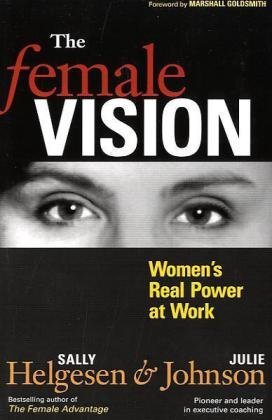
"The Female Vision," persuasively illustrates how a system that repeatedly underutilizes the unique talents of women is alienating more and more women as they reach the top. Helgesen & Johnson have written a well-researched book that offers a new perspective on why women leave when they break through the glass ceiling and reach the glass cliff. One phrase that came up over and over in their independent research was, "It just wasn't worth it." This sentence alone speaks to a much larger systemic culture issue that is not adequately captured by the current understanding of the lack of female executive leadership. In a brief summary, they discovered women often find it difficult to act on their unique skills and talents because companies are not structured in a way that values or allows for the expression of these traits. With frustration and personal defeat, women quietly exit the pathway to corporate leadership.  

Personally, I found this book to be affirming and energizing. Many of the stories are eerily recognizable and the research is clear. Yet, The Female Vision constructively offers compelling systemic solutions for organizations and businesses that want a refreshing approach to capitalizing on and developing their female talent.

Check it out: The first chapter is free for the Kindle!

Reposted with permission from Secretariain't. 

Tuesday, October 26, 2010

4 Trends that will Drive the Next Economy

by Jean Brittingham

I’ve been a little sluggish in my blogs recently because I’ve been working on the book! It’s very exciting to see it coming together. In the book we discuss the characteristics, strengths and success stories of women entrepreneurs and the critical role that women will play in the Next Economy. Today I thought I’d share my thoughts about this new economy as I see it evolving.

The real recovery from the “great recession” will come with some major changes that actually portend good things for entrepreneurs. First, there is near-consensus that the recovery cannot be built on consumption as it has reigned in the last 50 or so years. Resources are too limited, the planet is too fragile and large corporations that supported this consumption too easily become institutions unto themselves that care only for their own future and their own profits and fail in a huge and costly manner.

Instead we should begin to envision and shape the next economy—one that is focused on creating a new solid economic base, is powered by a low-or no carbon energy source, is driven by innovation, transparency and collaborative business models and creates opportunity across the entire spectrum of social-economic reality.

There are many thoughts and ideas out there about what will drive and create this new economy.  I believe it will be driven by the following four trends:

  1. A resource-constrained environment on a health-challenged planet
  2. The creation of “mega-intelligence” through collaborations that create in-depth knowledge and insights in the fields of science and technology
  3. A massive amplification of creativity that feeds innovation 
  4. The rise of entrepreneurial collaboratives 

Let’s first look at the issues related to a resource-constrained planet. This is not a hypothesis but rather our reality. Peak oil is around the corner. Coal, while abundant, is a major contributor to unhealthy air and global warming. Increasingly, we will have to learn how to reuse what we have already used and treat the planet as the amazing life support system that it is. This one truth has to be embraced—the planet does not exist for the benefit of the economy. It just exists. If we foul it forever, we are truly lost.

But an economy that benefits humankind, supports the development of peaceful society on earth, and sustains our life-support planet infinitely is not only possible but we can actually begin to see how we will get there.

Mega-intelligence as I am talking about it here is not a new field of study of the so-called super class of genius. I don’t mean to be dismissive, but if brillant individuals could save the world, we would certainly be in a different spot right now. More appropriately, this term refers to the combined or collective intelligence that can be put to a problem through the connectivity and transparency afforded by increasing ubiquitous technology. Our digital connections have taken us well beyond any boundary condition previously thought of around the internet (for those who like to think about limitations) to a place where individuals of different cultures and language are collaborating on projects ranging from nuclear energy to music in the “cloud” and we are lending our personal computing ability to work 24/7 on the worlds most pressing problems—at least those that can be approached through 0s and 1s.

We are at the edge of knowing how to harness and focus this intelligence and the success of recent movements ranging from politics to science assures us that we will solve many more problems together than we have even dared to dream of by ourselves.

Creativity is fuel. It generates momentum and optimism. A wonderful/horrible truth of human nature is that when pushed to the limit, we get very creative. Our survival instinct is strong and often kicks it into high gear to help us out of a tight spot.

The current economic reset represents just such a tight-spot. Even if you don’t understand or care much about economics, it’s clear that something dramatically different is afoot.  Not only is a rebound to the old consumptive habits unlikely—most of us don’t seem to want it. But we aren’t excited about a future that is less interesting or comfortable either. So things are getting creative. Creative ways of working and living, of finding value propositions and new business models and creative about collaboration and wealth creation. Creativity and urgency have energized some amazing collaboratives and innovations.

And finally, whether as a result or a response, the willingness to exercise our entrepreneurial spirit has never been higher. Whether in the clean-energy economy, social enterprises focused on creating breakthroughs in traditionally underserved communities or as spin-offs and internal “tanks” in the big dog corporations, the fall of the old economy has seen the rise of entrepreneurs.

Polar opposites come together to pave the way to a future that is more vibrant, resilient and flexible. A world where entrepreneurial spirit and self-reliance is augmented and magnified by a connected creativity supported by technology that builds communities that learn, grow and make a living together.

You can see why I think the entrepreneurial future is one where women will thrive.
Success in the future will likely be measured more by the quality of your experiences than the 0s after your income bracket. Your net contribution to life will matter more than your net worth. And the inheritances your grandkids will care about are great communities, interesting work and a healthy planet.

Monday, October 18, 2010

Angry, Exhausted, Frustrated and Wrong!

by Jean Brittingham

I didn’t even know where to start when my new-media maven asked me to respond to this post by Penelope Trunk.  I get the power of a hyperbolic title, but really? Women Don’t Want to Run Start-Ups Because They’d Rather Have Children?

There’s so much wrong here it’s hard to set your sights.
At the same time I completely feel for her.

And before I say anything else, congratulations Penelope on leading (what one can hope) will be a great success in your third start-up. It’s clearly been a struggle that lasted too long with too little reward. That in itself is dismaying, but it’s much more distressing when women with talent who have begun to carve a spot for themselves succumb to the models that make entrepreneurship exhausting, silly, and impossible to love.

Let’s begin with the premise behind Trunk’s (and Jeff Steibel’s) definition of entrepreneurism as a disease.  This particular definition suggests that these two (and a few other business writers with this view of entrepreneurship) think they “own” the definition.  Entrepreneurs to them are men (and the OCCASSIONAL woman) who take on VC capital against an unlikely bet and work horrific and thankless hours (the thanklessness comes mostly from the VC partners but also from the team you are driving and the family you are deserting) to breakthrough the probability factor and post an amazing win. 
Or at least get a buy-out so that you break even.

This isn’t THE Entrepreneur typology; it’s ONE Entrepreneur typology.

The state of the planet, the state of the economy, the state of our lives and the incredible number of human beings who have GREAT ideas they are turning into GREAT businesses means that this is a limited and limiting view of entrepreneurs.

Most importantly--it’s not going to help us construct the next economy.

Instead, I see a future (and many join me here) where both the investment community and consumers take note of and then begin to actively foment support for some different breeds of entrepreneurs. 

While I am not at all sure about the role Solopreneur’s will play in the next economy, it is clear that the reemergence of a craft economy plays a significant role in the future. These individual contributors, who are often working in complex networks and loose affiliations with others, are crazy, all right—crazy smart.
More interestingly (at least to me) are the new breed of social entrepreneur—where a much higher proportion of women are striking out and making a difference while making a living. These social entrepreneurs are developing businesses that offer solutions and hope because they see themselves and their business ideas as an integral part of a better world.

And finally, there are the women who are breaking through and making businesses work well and also work with their lives—businesses that create financial success for founders and a growing contingency of employees. These women believe that you can, and should, have a life and a business, a financial goal and an nonnegotiable ethos, a current reality that works and a future that works better.

Suggesting that women don’t want to be entrepreneurs because you have burned yourself out by “manning-up and buying-in” to a set of investor and personal standards that leave no space for anything but profit, is not the future of entrepreneurs.

It’s not the future of anything.
Life is too short, the planet is too fragile and frankly, Penelope is right—there are children to raise.  The part she got wrong is giving up one to get the other. I believe we can change the rules instead!

Wednesday, October 6, 2010

Emotional Intelligence and the Impact of Feminine Leadership

by Jean Brittingham

A recent study on group IQ confirms what we at the SmartGirl’s Way have long known—that women have rocking relationship skills.  The study shows that the ability of a group to solve a difficult problem was directly related to the number of women in the group--essentially the number of women increases the collective cognitive abilities of the group. Women are natural collaborators and relationship builders. What hasn’t been well documented yet, is the strong positive effect that these skills, referred to as “social sensitivity” in the study, have on the efficacy and productivity of groups working together in any capacity—including the work environment. 

The growing understanding of the importance of this link and its positive impact on performance contradicts some of western society's most loved conventions—in particular, that smart people alone make a smart group and that feelings don’t matter in the workplace.

In an ever more complex world, the ability to read expression and tone, express empathy, effectively reframe a tense situation, and energize a group through a sense of camaraderie are the winning leadership skills of the future.

When I first became intrigued with “women’s ways at work” and in particular the aspects of the feminine at work in a masculine world, I began to be very conscious and take note of the language women use to describe who they are, what they are doing and how they are doing it. I started noting strong similarities in the skills that women were applying to their lives, no matter what they were doing. I also noticed that women tended not to talk about these skills to men, in particular to the men they worked with and worked for.

I started asking direct questions about this and was amazed at the consistency in the answer—women don’t talk to men about how they think, feel, work, make decisions, create, collaborate or achieve because up to now, men not only don’t understand it they think it is too “soft” and doesn’t belong in the work place. Worse yet, since it is not as natural for men, they tend to diminish the importance of this type of intelligence in the work environment.  This even  after strong uptake (at least theoretically) on the concept of emotional intelligence.

A strong contributing factor to the lack of acknowledgment of women’s unique skills at work has been the intentional (and obviously necessary) effort to create equity between the genders in terms of pay, access and opportunity. Sadly this effort has unintentionally diminished the unique and valuable differences between men and women.

Time to Embrace the Feminine Leadership Skill Set!


Highly refined “social sensitivity” is an outcome of the ability and natural tendency to create strong communities and relationships that endure whatever the circumstances. It is a subset of an amazing array of feminine strengths that we have just begun to openly discuss and tap.

These skills are amazing, awesome, world-changing!!  Why would we want women to leave these capabilities to the other parts of their lives?  They have kept families and society ticking along for millennia. They are the foundation for the way that things work when they are working really, really well.  And they are dramatically missing in business. 

Finally, and maybe most importantly—they are the same traits needed for society to shift to a sustainable and THRIVING existence on our big blue ball. I for one want more of that.